
Zero-Emission Ferries: Fjord1’s Push for Sustainable Transport
The future of environmentally responsible maritime transport is already here. Fjord1’s zero-emission ferries, built at Tersan Shipyard in Turkey, demonstrate that this is no longer just an ambitious concept, but an operational reality. Zenitel contributes to this project by delivering critical maritime safety and communication systems for vessels designed for daily, emission-free operation.
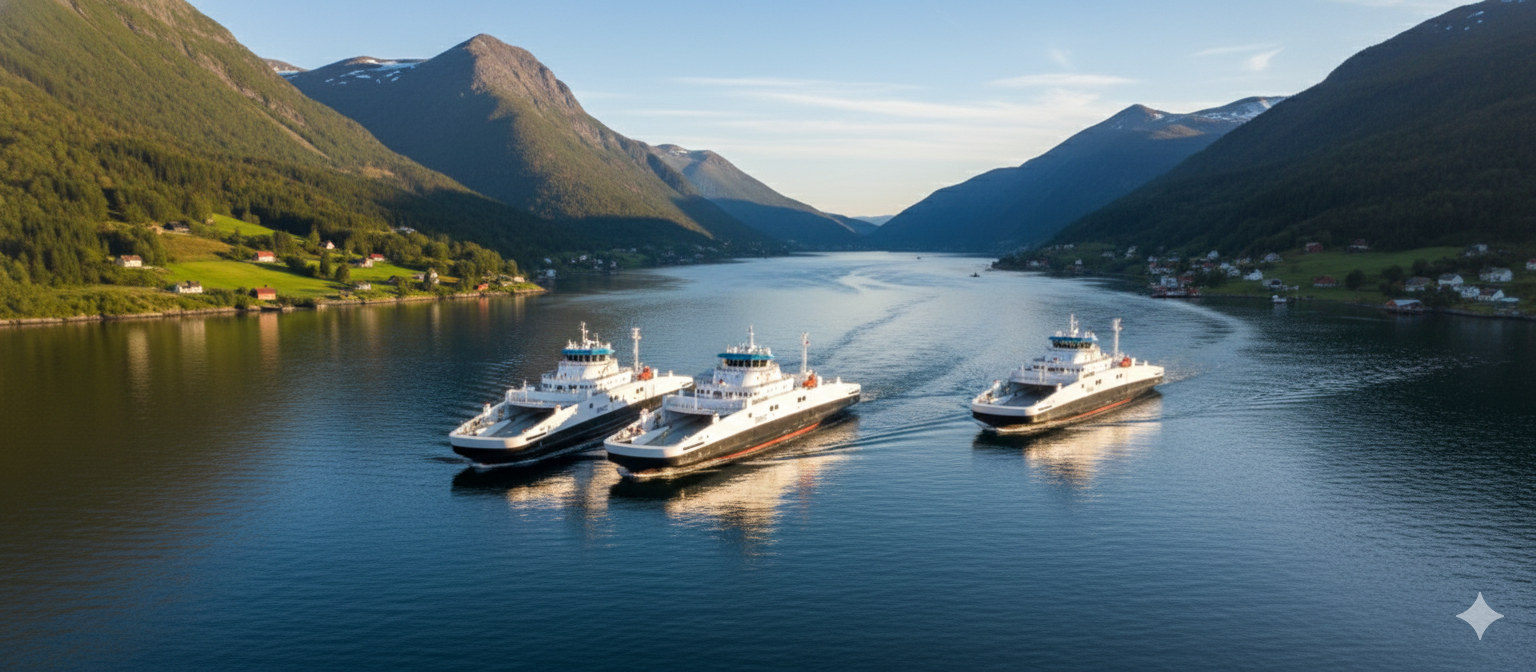
From Vision to a Zero-Emission Reality
For Fjord1, zero-emission ferry operations have been a long-term objective rather than a future promise. The challenge was turning battery-electric technology into a solution capable of handling real-life operational demands such as tight schedules, high-frequency crossings, and high availability requirements.
Scaling this approach required close collaboration between Fjord1, Tersan Shipyard, LMG Marin, HAV Design, and HAV Group-owned Norwegian Electric Systems (NES). The result is a new generation of battery-electric ferries designed not only to operate emission-free, but to evolve towards autonomous navigation. New vessels are built to ensure a high degree of automation, replacing manual operations.
Four zero-emission ferries will begin serving the Lavik–Oppedal route in 2026, with automated functions. Including auto-crossing and auto-docking, rolling out in 2027, and full autonomous navigation planned for 2028. More than a fleet renewal, this project sets a new benchmark for Norway, proving that electrification and automation combined are reshaping the future of passenger transport.
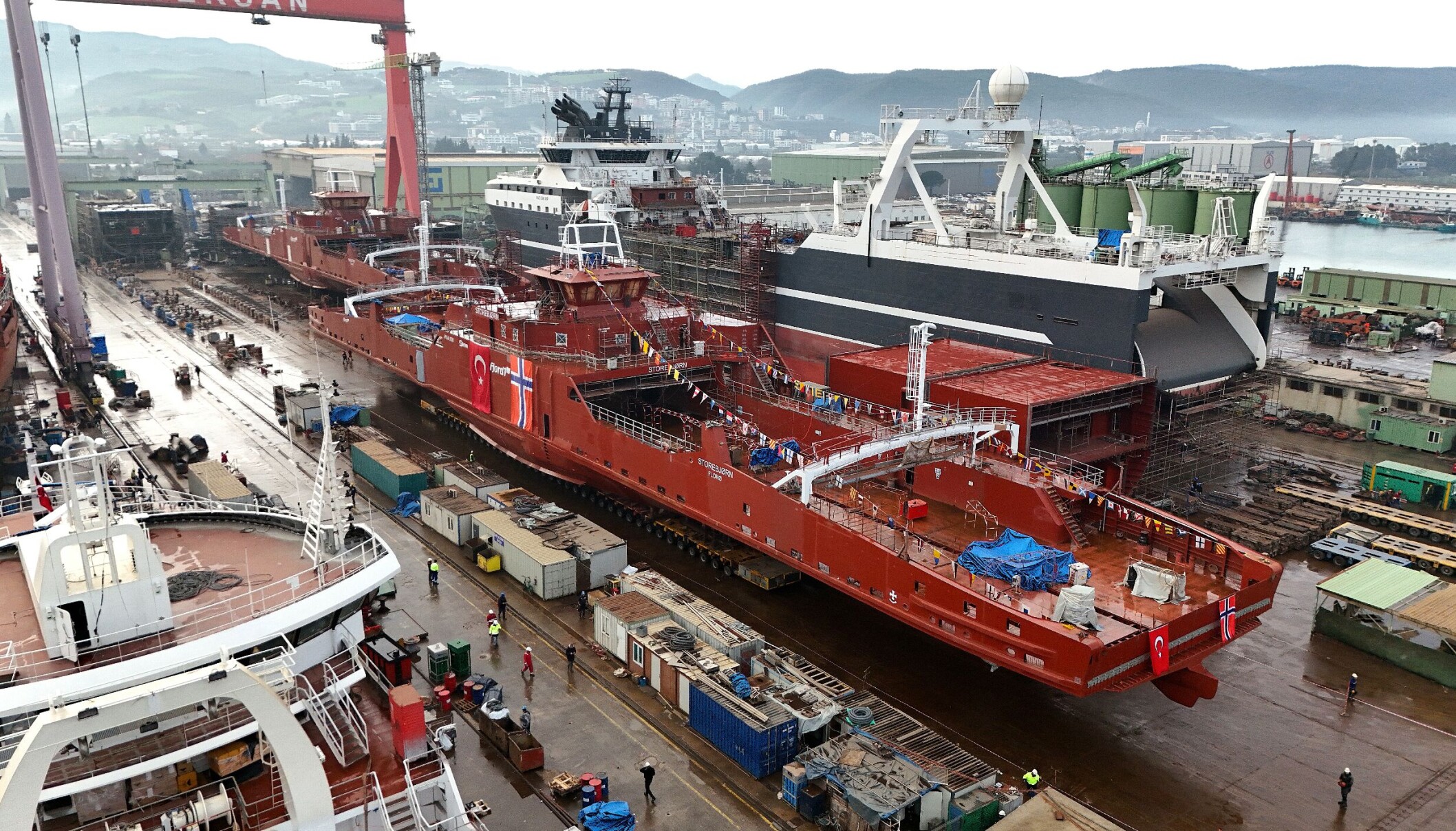
Technology Onboard Zero-Emission Ferries: Built for Real Life at Sea
Fjord1’s new ferries are designed for one goal: making sustainable transport work, every single day. These vessels are designed to operate on one of Norway’s busiest routes, carrying more than a million cars a year. At their core, they are fully integrated, battery-electric vessels where sustainability, safety, and operational reliability are inseparable.
Automation and power systems from Norwegian Electric Systems (NES) support functions such as automatic crossings, auto-docking, and optimized steering across all speed ranges. This reduces manual workload for crews, improves consistency, and enhances operational safety.
Combined with high-capacity Megawatt Charging Systems (MCS), the ferries can recharge in approximately ten minutes while in port, enabling frequent departures without disrupting traffic flow.
In this ecosystem, Zenitel plays a critical role as part of the vessels’ safety and communication backbone. PA/GA and onboard communication systems ensure clear communication between crew and passengers, support situational awareness on the bridge, and contribute to safe, efficient daily operations.
Global Impact: The Real Benefits of Sustainable Maritime Transport
This project demonstrates how zero-emission ferry operations can be implemented at scale on demanding routes.
Environmental and Community Benefits
The ferries are designed for full-electric operation on key routes such as Stårheim–Isane and Måløy–Oldeide, using combustion engines only as backup. This supports Norway’s national goal of moving passenger and ferry traffic in the World Heritage fjords to zero emissions by 2026. The result is a significant reduction in CO₂ and methane emissions, lower noise levels, and a noticeably more comfortable experience for passengers and nearby communities.
Operational Improvements
Increased operational efficiency enables more frequent departures, reducing intervals from 20 to 15 minutes and improving reliability for everyday transport needs.
Industry-Wide Value
With a focus on scalable vessel platforms, integrated automation, and proven onboard systems, the project provides a relevant reference for ferry operators and yards planning similar electrification projects.
Real Benefits Today and a Scalable Future for Zero-Emission Ferries
Fjord1’s zero-emission ferry project shows that battery-electric ferry operations are already viable in daily service. Through integrated vessel design, automation, and close collaboration across the value chain, the project provides a practical model for future zero-emission ferry programs.