
Communication systems supporting everyday operations: Turkon Line Container Vessels
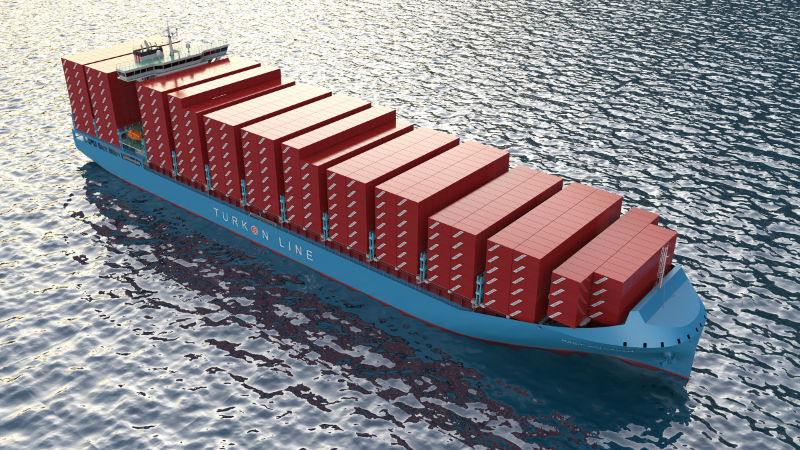
Turkon Line fleet is expanding with two new 4,000 TEU container vessels built at Sedef Shipyard in Turkey. To support daily operations, maritime communication systems for container vessels play a critical role in ensuring safe, reliable, and efficient onboard coordination. Zenitel has delivered a comprehensive communication platform designed to meet these operational demands in modern container shipping.
Container Shipping as the Backbone of Global Trade
According to the United Nations Conference on Trade and Development (UNCTAD), around 80% of global trade by volume is transported by sea. In this context, container shipping serves as the backbone of global trade, enabling the continuous movement of goods between major production and consumption regions.
Liner container services operate within a highly structured environment, with vessels following fixed routes and tight schedules. They call at multiple ports while handling large volumes of cargo within limited time windows. Reliability and predictable performance are therefore essential, as even minor delays can disrupt entire supply chains.
Built for Reliable Operations
The two new 4,000 TEU vessels delivered to Turkon Line reflect this operational reality. Designed for regular liner services between Turkey, the Red Sea, and India, they represent a widely used and scalable vessel type that underpins many regional and intercontinental container routes.
Built at Sedef Gemi Shipyard in Tuzla, the vessels are the largest container vessels constructed in Turkey to date, marking the return of commercial shipbuilding in the country after 22 years. According to Alkin Kalkavan, the vessels are designed to operate on five different fuels while increasing the company’s overall transport capacity by approximately 50%.
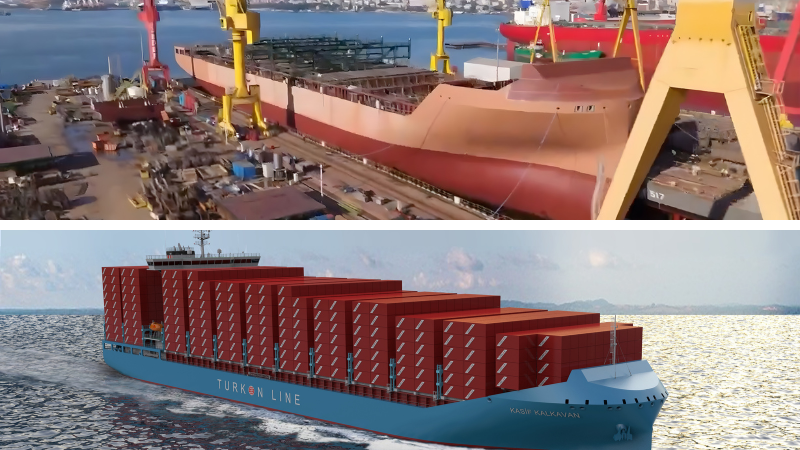
Image and Illustration © Newsatsea and Sedef Shipbuilding Inc.
Why Maritime Communication Systems Are Critical at Sea
On modern container vessels, communication platforms function as critical, yet often invisible, infrastructure that supports daily ship operations. Ships operate continuously, often on demanding schedules and across multiple ports. In this environment, clear and reliable communication between the bridge, engine room, and deck teams is essential for maintaining operational efficiency and safety. Routine procedures such as maneuvering, cargo handling, and technical maintenance depend on fast and accurate information exchange between crew members working in different areas of the vessel.
Structured alarm management is another key component of onboard operations. Solutions that support the distribution of alarms and announcements ensure that critical messages are delivered clearly and without delay. Reliable voice communication enables crew members to coordinate actions quickly, particularly in time-sensitive situations. Together, these systems contribute to a safer, more responsive, and well-coordinated working environment at sea.
Complete Communication Package — A Universal Platform for Maritime Vessels
Modern container vessels operating regular liner routes benefit from communication systems that are reliable, standardized, and easy to integrate across multiple builds. In series construction projects, repeatable system configurations enable shipowners and shipyards to implement proven solutions that support consistent operational performance.
For the two new vessels operated by Turkon Line, Zenitel delivered a complete onboard communication package designed as an integrated platform for everyday maritime operations. The scope of delivery includes:
- SPA V2 PAGA System
- CIS TalkBack
- Master Clock System
- LAN Distribution Network
- ICS 6200 Integrated Telephone
- Batteryless Telephone
- Sound Signal Reception.
Together, these systems form a unified communication infrastructure that supports both operational coordination and onboard safety functions. The standardized configuration simplifies system integration during vessel construction while ensuring compatibility between different communication components.
For crews, consistency in system layout is equally important. Standardized interfaces and operating principles allow crew members to quickly become familiar with onboard communication tools, supporting efficient coordination during both routine operations and emergency situations.
Partnership in the Maritime Industry for Effective Results
The project was delivered through close cooperation between several maritime industry partners. Turkon Line defined the operational requirements, ensuring that onboard systems reflect the realities of liner container services. Vessel construction was carried out by Sedef Shipyard, while Nemomarin acted as the local system partner responsible for integration and project coordination. Zenitel delivered the complete communication infrastructure. This structured collaboration combined operational insight, shipbuilding expertise, and local technical support.
Zenitel’s communication system scope is complete, structured, and repeatable, enabling predictable integration across similar vessel types. Designed to support everyday ship operations, the solution contributes to safe, reliable, and efficient container transport across regular liner routes.